
Monday, March 9, 2020
Saturday, March 7, 2020
Gold Surges Higher, Posting Huge Gains as Covid-19 Spreads Through North America
The Federal Reverse has cast caution to the wind, they have shattered their previous projection of "no expected rate cuts in 2020", with still nearly 10 months remaining in the year.
This quick change in course occurred on Tuesday, as the Federal Reserve, led by Chairman Jerome Powell, held an unexpected emergency meeting in which they slashed rates by 50 basis points, making the new effective Fed funds rate 1.0 - 1.25%.
What is most shocking in this unexpected move was that it occurred just weeks before an already scheduled, planned Fed meeting, which was set to take place on March 17th-18th in Washington.
This meant that the Federal Reserve felt that this emergency rate cut was needed right now and that they could not wait a mere 12 days! Think about that for a moment.
The Federal Reserve, along with other Central Bankers around the world, like so many others have been completely caught off guard by the rapid spread of thecoronavirus .
New cases appear on a daily basis, with some countries such as the United States taking emergency action, hoping to contain the virus before it is too late.
Pushing for further rate cuts, President Trump, in typical fashion, took to Twitter to berate the Federal Reserve, calling for a further slashing of rates.


At this point, anything is possible and the future is widely unpredictable. The markets hate this, as uncertainty will lead to wild gyrations in the price of stocks as we move forward.
Meanwhile, I believe that anything is now possible for the price of gold as we head deeper into 2020 and as the threat of thecoronavirus and the impact that it will have on the world's economy continues to worsen.
I believe gold at $2000 an ounce at this point is a very likely target, the only question is, how fast will it reach it?
- As first seen on the Sprott Money Blog
This quick change in course occurred on Tuesday, as the Federal Reserve, led by Chairman Jerome Powell, held an unexpected emergency meeting in which they slashed rates by 50 basis points, making the new effective Fed funds rate 1.0 - 1.25%.
What is most shocking in this unexpected move was that it occurred just weeks before an already scheduled, planned Fed meeting, which was set to take place on March 17th-18th in Washington.
This meant that the Federal Reserve felt that this emergency rate cut was needed right now and that they could not wait a mere 12 days! Think about that for a moment.
The Federal Reserve, along with other Central Bankers around the world, like so many others have been completely caught off guard by the rapid spread of the
New cases appear on a daily basis, with some countries such as the United States taking emergency action, hoping to contain the virus before it is too late.
Pushing for further rate cuts, President Trump, in typical fashion, took to Twitter to berate the Federal Reserve, calling for a further slashing of rates.
I personally believe that he is going to get his wish, as the Federal Reserve knows now the economic damage that is going to erupt due to the spread of the coronavirus , as supply chains around the world begin to feel massive disruptions in the months ahead.
In addition to this, sectors of the economy, such as those related to hospitality, travel and leisure are going to be crushed if this virus is not contained soon, as many people are going to simply put off unnecessary travel and expenses, creating a spiralling, self-fulling prophecy that will result in a major economic recession.
The Federal Reserve in this case is going to have no choice but to slash rates, over and over again, moving into negative interest rate territory, such as those seen in the European Union and Japan.
Unfortunately for those countries, they have no room to move lower, as their rates are already in unchartered territory.
However, other Central Banks around the world will follow suit, joining the Federal Reserve in their crusade of lower and lower interest rates, attempting to prop up their economies.
In addition to this, Central Bankers will enact massive stimulus programs, that could possibly even dwarf that of the 2008 crisis, sending their printing presses into hyperdrive .
Those who cannot cut rates, such as those previously mentioned, due to already being in negative territory, will simply print even more fiat money.

(Chart via goldprice.org)
Gold bullion appears to be well aware of this possible future scenario as well, as it is now being bought hand over fist, moving up a stunning 1.68% in today's trading session alone.
This puts gold bullion up 5.35% over the past 30 days and up 27.72% over the last year.
These are huge gains and once again prove that in a time of unfolding crisis, gold bullion is the same safe haven asset that it has been for thousands, upon thousands of years. Offering much needed financial protection in a time of need.
Meanwhile, in the same time period, stock markets have corrected by over 10% in the last 30 days, which are truly stunning losses for anyone who has just lately come to the party.
Will we see further drops in the market, or have the weak hands already been flushed out? Sadly, I believe that the market is so overbought and so inflated at the moment, that we have only seen the tip of the proverbial iceberg, with additional, huge corrections yet to be seen.
This prognostic is further reinforced by how the markets responded following the Fed's "shock and awe" emergency meeting that took place on Tuesday.
After lowering rates in an unexpected fashion, the expected result would of been a rally in market prices, correct?
Well, sadly for the Federal Reserve and many other market participants, the exact opposite occurred, as the DOW Jones dropped 2.94%, the S&P 500 plunged 2.81% and the NASDAQ followed suit, falling 2.99%.
(Charts via google.com)
And even though some of these losses were earned back during Wednesdays trading session , they were then completely eradicated throughout Thursdays trading session, with the S&P 500 dropping a stunning 3.41% and the DOW Jones 3.47%, at the time of writing.
At this point, anything is possible and the future is widely unpredictable. The markets hate this, as uncertainty will lead to wild gyrations in the price of stocks as we move forward.
Meanwhile, I believe that anything is now possible for the price of gold as we head deeper into 2020 and as the threat of the
I believe gold at $2000 an ounce at this point is a very likely target, the only question is, how fast will it reach it?
- As first seen on the Sprott Money Blog

Friday, March 6, 2020
Forget gold’s rally, check out this metal that is the one to watch says expert
Ryan Giannotto, director of research at GraniteShares ETFs, said that this is all about access to the metal and not economic conditions.
“Automakers are in the business of meeting environmental emissions, not being prop traders at Goldman Sachs,” he said. “That is what is fueling this trend.” Giannotto noted that only 30,000 ounces of rhodium are produced annually.
However, the market Giannotto is watching if platinum as the metal has struggled in the current environment.
- Source, Kitco News
Sunday, March 1, 2020
Golden Rule Radio: Gold Climbs As Stocks Hit Hard On Virus Fears
We cover the price movements of gold, silver, platinum, palladium, the US Dollar index, DOW transports, and more in this week's show.
- Source, Golden Rule Radio
Saturday, February 29, 2020
Historic Losses Occur as Wall Street Finally Realizes the Threat that the Coronavirus Poses to the Global Economy
Things are accelerating fast, as the markets have finally come to the same realization that I reached over a month ago, the coronavirus is going to have a massive economic impact, that could possibly send the world into a severe recession.
The reasoning for this has been well documented through my last number of articles, however, it bears reiterating that tourism, global travel and the vital supplychains that so many companies now rely on in this new age of globalism, are going to be severely impacted, possibly even crippled as this virus continues to spread across the world.
Many people are starting to become fearful and beginning to take precautions, buying whatever form of protection that they can, most notably in the form of protective masks with ratings of N95 or higher, even despite the fact that it has been proven that these do not fully protect a person from contracting thecoronavirus .
Still, anything helps and you cannot blame people for attempting to get ahead of the curve before these sell out across North America, as has been seen in other countries such as China, South Korea and any other region heavily impacted already by thecoronavirus .
Already on websites such as Amazon and eBay, we can see people attempting to sell these face masks for outrageous prices, a common tactic in times of crisis. Anything reasonably prized has been sold out for days.
Wall Street, who has blissfully been ignoring the spread of the virus for weeks, finally woke up on Monday morning, realizing that this crisis is not going away and is indeed here to stay for many months to come.
This caused prices of stocks to absolutely tank throughout the trading week, resulting in losses that are truly historic given the short period of time in which they occurred. Trillions of dollars have been wiped off the books, resulting in staggering losses.
The drop throughout this week was so severe and so sharp that we have to go all the way back to 1928, days before the Great Depression began, to find a comparable scenario.


- As first seen on the Sprott Money Blog
The reasoning for this has been well documented through my last number of articles, however, it bears reiterating that tourism, global travel and the vital supply
Many people are starting to become fearful and beginning to take precautions, buying whatever form of protection that they can, most notably in the form of protective masks with ratings of N95 or higher, even despite the fact that it has been proven that these do not fully protect a person from contracting the
Still, anything helps and you cannot blame people for attempting to get ahead of the curve before these sell out across North America, as has been seen in other countries such as China, South Korea and any other region heavily impacted already by the
Already on websites such as Amazon and eBay, we can see people attempting to sell these face masks for outrageous prices, a common tactic in times of crisis. Anything reasonably prized has been sold out for days.
Wall Street, who has blissfully been ignoring the spread of the virus for weeks, finally woke up on Monday morning, realizing that this crisis is not going away and is indeed here to stay for many months to come.
This caused prices of stocks to absolutely tank throughout the trading week, resulting in losses that are truly historic given the short period of time in which they occurred. Trillions of dollars have been wiped off the books, resulting in staggering losses.
The drop throughout this week was so severe and so sharp that we have to go all the way back to 1928, days before the Great Depression began, to find a comparable scenario.
(Charts via google.com)
Even at the time of writing, on Thursday, February 27th, markets continue to nosedive lower, with the S&P 500 Index dropping by 2.25% and the Dow Jones Industrial Average plummeting by 2.41%.
These drops come after days of already heavy losses, compounding the pain and leading to additional selling by those who are fearful.
To make matters worse, we now have a number of stories hitting the airwaves about how numerous senior officials have contracted the coronavirus , such as the Iranian Vice President for women and family affairs, Masoumeh Ebtekar and a former ambassador to the Vatican, Hadi Khosroshahi, the latter of which passed away due to the virus.

(Chart via worldometers.info)
As of today, the total number of coronavirus cases still continues to climb, reaching 82,758 in total, with 2,817 of these resulting in fatality, according to official reports.
Many speculate that these numbers are an estimation only, with the real numbers being much higher.
It doesn't end there, as the State of California brings additional bad news, announcing today that they are in a state of emergency, as they monitor 8,400 people, whom they suspect may be infected with the coronavirus .
(Chart via goldprice.org)
Meanwhile, gold bullion, after an initial sell off earlier in the week, due to people needing liquidity, has now found support and is holding its ground, due to people purchasing it as a safe haven play.
Unfortunately, as I have been saying for weeks, this situation is in all likelihood only going to worsen in the months to come, as the true impact of the coronavirus is yet to be felt.
As people become fearful, they begin to self isolate, travel less and thus spend less, the latter of which is a death nail for the consumer based economy we now live in.
If this virus continues to spread at the rate it has, then you should expect to see many more violent trading days in our near future, shaving additional trillions off of the markets as they descend lower and adjust for the financial impact that is coming.
Sadly, I believe this is far from over yet and the losses that we are now witnessing are just the tip of the iceberg.
- As first seen on the Sprott Money Blog
Friday, February 28, 2020
Record Breaking Stock Market Crash, What You Need to Know About What Comes Next
Records are being broken left and right as the stock market crashes and there's more than just a few reasons for this.
Tim and John break down the many symptoms of this historic market move, as well as what is coming next.
- Source, World Alternative Media
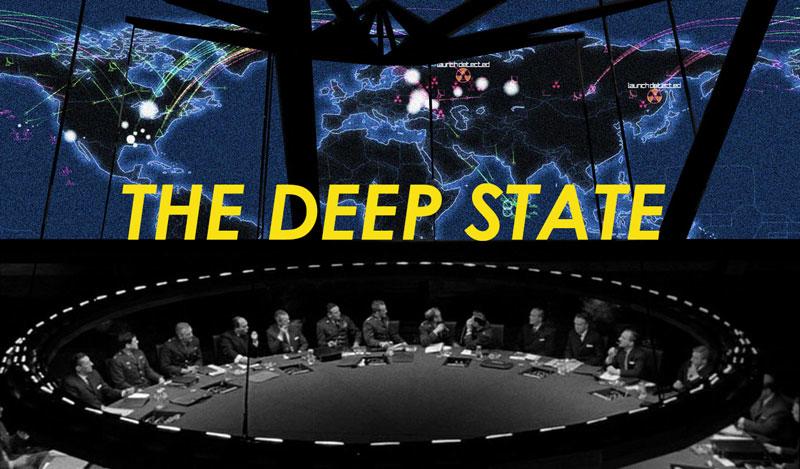
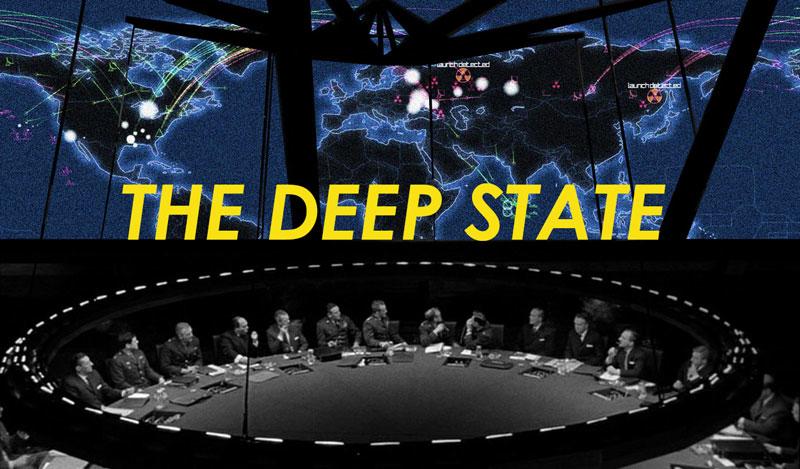
What is the Deep State?
A new focus on the Deep State in undermining the national interests has become a serious thought for many citizens. Not known to many, the Deep State has its origin in the British Empire and how the Round Table infiltrated former British colonies (including India) through America.
Last year, fuel was added to this fire when internal memos were leaked from the British-run Integrity Initiative featuring a startling account of the techniques deployed by the anti-Russian British operation to infiltrate American intelligence institutions, think tanks and media.
The Integrity Initiative
For those who may not know, The Integrity Initiative is an anti-Russian propaganda outfit funded to the tune of $140 million by the British Foreign office. Throughout 2019, leaks have been released featuring documents dated to the early period of Trump’s election, demonstrating that this organization, already active across Europe promoting anti-Russian PR and smearing nationalist leaders such as Jeremy Corbyn, was intent on spreadingdeeply into the State Department and setting up “clusters” of anti-Trump operatives. The documents reveal high level meetings that Integrity Initiative Director Chris Donnelly had with former Trump Advisor Sebastien Gorka, McCain Foundation director Kurt Volker, Pentagon PR guru John Rendon among many others.
The exposure of the British hand behind thescenes affords us a unique glimpse into the real historical forces undermining America’s true constitutional tradition throughout the 20th century, as Mueller/the Five Eyes/Integrity Initiative are not new phenomena but actually follow a modus operandi set down for already more than a century. One of the biggest obstacles to seeing this modus operandi run by the British Empire is located in the belief in a mythology which has become embedded in the global psyche for over half a century and which we should do our best to free ourselves of.
Myth of the “American Empire”
While there has been a long-standing narrative promoted for over 70 years that the British Empire disappeared after World War II having been replaced by the “American Empire”, it is the furthest thing from the truth. America, as constitutionally represented by its greatest presidents (who can unfortunately be identified by their early deaths while serving in office),were never colonialist and were always in favor of reining in British Institutions at home while fighting British colonial thinking abroad.
Franklin Roosevelt’s thirteen year-long battle with the Deep State, which he referred to as the “economic royalists who should have left America in 1776″, was defined in clear terms by his patriotic Vice-President Henry Wallace who warned of the emergence of a new Anglo-American fascism in 1944 when he said:
“Fascism in the postwar inevitably will push steadily for Anglo-Saxon imperialism and eventually for war with Russia. Already American fascists are talking and writing about this conflict and using it as an excuse for their internal hatreds and intolerances toward certain races, creeds and classes.”
The fact is that already in 1944, a policy of Anglo-Saxon imperialism had been promoted subversively byBritish -run think tanks known as the Round Table Movement and Fabian Society, and the seeds had already been laid for the anti-Russian cold war by those British-run American fascists. It is not a coincidence that this fascist Cold War policy was announced in a March 5, 1946 speech in Fulton, Missouri by none other than Round Table-follower and the butcher of Bengal, Winston Churchill.
Last year, fuel was added to this fire when internal memos were leaked from the British-run Integrity Initiative featuring a startling account of the techniques deployed by the anti-Russian British operation to infiltrate American intelligence institutions, think tanks and media.
The Integrity Initiative
For those who may not know, The Integrity Initiative is an anti-Russian propaganda outfit funded to the tune of $140 million by the British Foreign office. Throughout 2019, leaks have been released featuring documents dated to the early period of Trump’s election, demonstrating that this organization, already active across Europe promoting anti-Russian PR and smearing nationalist leaders such as Jeremy Corbyn, was intent on spreading
The exposure of the British hand behind the
While there has been a long-standing narrative promoted for over 70 years that the British Empire disappeared after World War II having been replaced by the “American Empire”, it is the furthest thing from the truth. America, as constitutionally represented by its greatest presidents (who can unfortunately be identified by their early deaths while serving in office),
Franklin Roosevelt’s thirteen year-long battle with the Deep State, which he referred to as the “economic royalists who should have left America in 1776″, was defined in clear terms by his patriotic Vice-President Henry Wallace who warned of the emergence of a new Anglo-American fascism in 1944 when he said:
“Fascism in the postwar inevitably will push steadily for Anglo-Saxon imperialism and eventually for war with Russia. Already American fascists are talking and writing about this conflict and using it as an excuse for their internal hatreds and intolerances toward certain races, creeds and classes.”
The fact is that already in 1944, a policy of Anglo-Saxon imperialism had been promoted subversively by
The Round Table Movement
When the Round Table Movement was created with funds from the Rhodes Trust in 1902, a new plan was laid out to create a new technocratic elite to manage the re-emergence of the new British Empire and crush the emergence of nationalism globally. This organization would be staffed by generations of Rhodes Scholars who would receive their indoctrination in Oxford before being sent back to advance a “post-nation state” agenda in their respective countries.
As this agenda largely followed the mandate set out by Cecil Rhodes in his Seventh Will who said “Why should we not form a secret society with but one object: the furtherance of the British Empire and the bringing of the whole uncivilized world under British rule, for the recovery of the United States, and for the making of the Anglo-Saxon race but one Empire?”
When the Round Table Movement was created with funds from the Rhodes Trust in 1902, a new plan was laid out to create a new technocratic elite to manage the re-emergence of the new British Empire and crush the emergence of nationalism globally. This organization would be staffed by generations of Rhodes Scholars who would receive their indoctrination in Oxford before being sent back to advance a “post-nation state” agenda in their respective countries.
As this agenda largely followed the mandate set out by Cecil Rhodes in his Seventh Will who said “Why should we not form a secret society with but one object: the furtherance of the British Empire and the bringing of the whole uncivilized world under British rule, for the recovery of the United States, and for the making of the Anglo-Saxon race but one Empire?”
- Source, Great Game India, read more here
Wednesday, February 26, 2020
If the coronavirus isn’t contained, a severe global recession is almost certain
The world woke up Monday to the reality that the coronavirus epidemic is going to have a much bigger impact on the global economy than investors and policy makers had assumed. Just how big, no one really knows.
Last week, it seemed as if financial markets believed that COVID-19 would be contained. But new cases in Italy, South Korea and Iran over the weekend undermined that belief. The World Health Organization tried to reassure the public on Monday, saying the disease was not yet a pandemic because it was not spreading in an uncontained way.
No matter, stock markets GDOW, -2.81% SPX, -2.87% and other financial markets BUXX, +0.02% TMUBMUSD10Y, -6.89% GC00, +0.72% were quickly recalibrating the worst-case scenario, one in which hundreds of millions of people would be infected, and millions would die.
Nasty, brutish and short
Investors are just beginning to price in the possibility of a sharp and nasty global recession that would be followed by a rapid rebound once the disease has run its course. Whenever that will be.
In the longer run, of course, a pandemic could have more far-reaching effects, including a smaller and less productive workforce and even a reordering of globalization.
We’d like to think that we can know the worst that could happen, but there is still so much that isn’t known about COVID-19, the disease caused by the new coronavirus that emerged in China and now spreading around the world. Most of the economic analysis is based on past pandemics, such as the 1918 global influenza pandemic, and more recent bouts with avian flu, SARS and MERS.
Last week, it seemed as if financial markets believed that COVID-19 would be contained. But new cases in Italy, South Korea and Iran over the weekend undermined that belief. The World Health Organization tried to reassure the public on Monday, saying the disease was not yet a pandemic because it was not spreading in an uncontained way.
No matter, stock markets GDOW, -2.81% SPX, -2.87% and other financial markets BUXX, +0.02% TMUBMUSD10Y, -6.89% GC00, +0.72% were quickly recalibrating the worst-case scenario, one in which hundreds of millions of people would be infected, and millions would die.
Nasty, brutish and short
Investors are just beginning to price in the possibility of a sharp and nasty global recession that would be followed by a rapid rebound once the disease has run its course. Whenever that will be.
In the longer run, of course, a pandemic could have more far-reaching effects, including a smaller and less productive workforce and even a reordering of globalization.
We’d like to think that we can know the worst that could happen, but there is still so much that isn’t known about COVID-19, the disease caused by the new coronavirus that emerged in China and now spreading around the world. Most of the economic analysis is based on past pandemics, such as the 1918 global influenza pandemic, and more recent bouts with avian flu, SARS and MERS.
Nothing like it in recent history
But none of those examples fit the current situation perfectly. For one thing, unlike the flu, no one in the world has any natural immunity to this disease, nor is there a vaccine. The coronavirus is quite contagious, and many more people are likely to get COVID-19 than is assumed in these generic pandemic simulations.
The more recent pandemics weren’t nearly as widespread or deadly as this one seems to be. People who don’t appear to be sick can transmit the virus, making efforts to contain its spread magnitudes more difficult.
What’s more, the 1918 flu pandemic occurred in a different world, the world before airlines shrank the world, the world before globalization knitted our economies closer than ever, and the world before the internet, a technology that can spread misinformation and fear virally around the globe in an instant.
For example, the 1918 pandemic didn’t seem to have much impact on global trade or financial markets. Compare that to what we’ve already seen with COVID-19. Here’s what Apple, Procter & Gamble, Walmart and other U.S. companies are saying about the coronavirus outbreak.
That means the economic impact of a global pandemic of these proportions could be much larger than what investors and policy makers have assumed...
But none of those examples fit the current situation perfectly. For one thing, unlike the flu, no one in the world has any natural immunity to this disease, nor is there a vaccine. The coronavirus is quite contagious, and many more people are likely to get COVID-19 than is assumed in these generic pandemic simulations.
The more recent pandemics weren’t nearly as widespread or deadly as this one seems to be. People who don’t appear to be sick can transmit the virus, making efforts to contain its spread magnitudes more difficult.
What’s more, the 1918 flu pandemic occurred in a different world, the world before airlines shrank the world, the world before globalization knitted our economies closer than ever, and the world before the internet, a technology that can spread misinformation and fear virally around the globe in an instant.
For example, the 1918 pandemic didn’t seem to have much impact on global trade or financial markets. Compare that to what we’ve already seen with COVID-19. Here’s what Apple, Procter & Gamble, Walmart and other U.S. companies are saying about the coronavirus outbreak.
That means the economic impact of a global pandemic of these proportions could be much larger than what investors and policy makers have assumed...
- Source, Market Watch
Trump To Hold News Conference At 6pm ET To Dispel Media's "Fake News, Panicking" Over Virus Outbreak
Having already urged the American public to 'buy the dip', just before another 900 point drop in the Dow, President Trump has decided to take matters into his own hands - the only way he knows how.
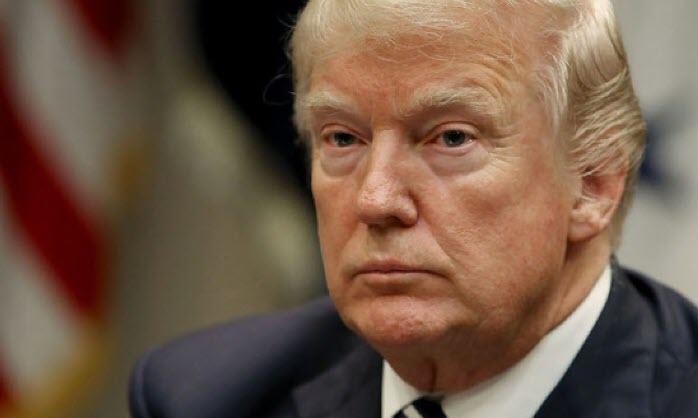
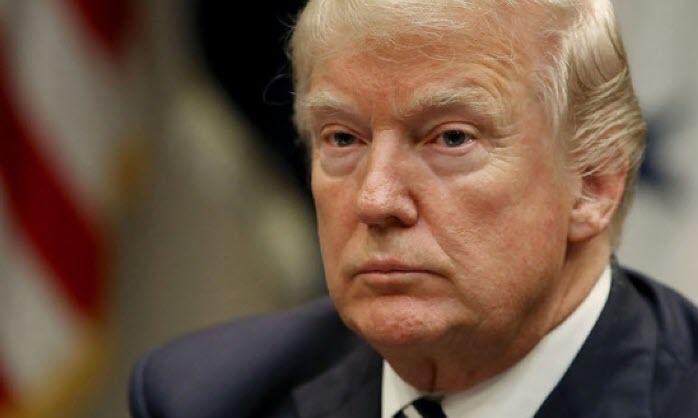
In a double tweet this morning, Trump announced he will hold a news conference at 6pmET to put the American people straight.,
"I will be having a News Conference at the White House, on this subject, today at 6:00 P.M. CDC representatives, and others, will be there. Thank you!"
The reason for his sudden need to address the public (aside from the 2000 points drop in the Dow) is that
"Low Ratings Fake News MSDNC (Comcast) & CNN are doing everything possible to make the Caronavirus look as bad as possible, including panicking markets, if possible. "
And responding to Democrats new narrative that The Trump administration is not doing enough, he lashed out:
"Likewise their incompetent Do Nothing Democrat comrades are all talk, no action. USA in great shape!"
One thing does make our eyebrows raise a little is the CDC official that raised what is somewhat unprecedented alerts yesterday has an interesting family linkage.

Dr. Nancy Messonnier, the CDC Director of the Center for the National Center for Immunization and Respiratory Diseases, warned ominously that:
"As more and more countries experience community spread, successful containment at our borders becomes harder and harder. It’s not a question of if this will happen but when this will happen and how many people in this country will have severe illnesses. Disruption to everyday life might be severe."
Well, it turns out Dr. Nancy Messonnier is the sister of the former Deputy Attorney General Rod Rosenstein who appointed Special Counsel Robert Mueller.
In a double tweet this morning, Trump announced he will hold a news conference at 6pmET to put the American people straight.,
"I will be having a News Conference at the White House, on this subject, today at 6:00 P.M. CDC representatives, and others, will be there. Thank you!"
The reason for his sudden need to address the public (aside from the 2000 points drop in the Dow) is that
"Low Ratings Fake News MSDNC (Comcast) & CNN are doing everything possible to make the Caronavirus look as bad as possible, including panicking markets, if possible. "
And responding to Democrats new narrative that The Trump administration is not doing enough, he lashed out:
"Likewise their incompetent Do Nothing Democrat comrades are all talk, no action. USA in great shape!"
One thing does make our eyebrows raise a little is the CDC official that raised what is somewhat unprecedented alerts yesterday has an interesting family linkage.

Dr. Nancy Messonnier, the CDC Director of the Center for the National Center for Immunization and Respiratory Diseases, warned ominously that:
"As more and more countries experience community spread, successful containment at our borders becomes harder and harder. It’s not a question of if this will happen but when this will happen and how many people in this country will have severe illnesses. Disruption to everyday life might be severe."
Well, it turns out Dr. Nancy Messonnier is the sister of the former Deputy Attorney General Rod Rosenstein who appointed Special Counsel Robert Mueller.
- Source, Zero Hedge
Democratic Debate: Chaos Reigns as Shouting Match Breaks Out in South Carolina
CBS News moderators Gayle King and Norah O’Donnell struggled to keep the unruly seven candidates in line as they rushed to attack Bernie Sanders who they now realize is on an unstoppable march to the nomination.
At one point, all of the candidates were wildly flapping their hands and yelling over each other before former veep Joe Biden chastised their on-stage decorum.
“I guess the only way to do this is jump in and speak twice as long as you should,” Biden said as ex South Bend-mayor Pete Buttigieg went on a long sermon about how Sanders would cost Democrats the House majority, a statistic based on polling conducted by Bloomberg’s campaign.
Showing more fire than he has in many debates, Biden shot back when Buttigieg and other candidates tried to cut him off after King has specifically called on him to speak.
“You spoke over your time so I’m going to talk,” the former veep bellowed at the rest of the crowded field to huge cheers from the crowd.
Biden is in a fight for his life in South Carolina ahead of Saturday’s primary, with Sanders and billionaire Tom Steyer swallowing his lead with black voters.
- Source, NYPost
Monday, February 24, 2020
Get Ready: Coronavirus is the Real Deal, Stock Market Plunges, Gold Rallies
Martenson says governments are hooked on huge deficits and cheap money too, and now the China virus chaos hits an already over-leveraged economy, and more massive money printing is needed to keep debt from defaulting.
Martenson says, “This is taking the world’s most important manufacturing center and shutting it down all at once. That’s like throwing a car into reverse at 60 miles per hour on the highway. Supply chain disruptions are going to be legendary.
This isn’t like one company having trouble like AIG where Hank Paulson has to ride to the rescue with $700 billion of fresh U.S. taxpayer money. We are talking about a system of tens of thousands of interlocking components that are frozen, and nobody quite knows how to unravel all of that.
I think that is well beyond the capability of the Federal Reserve to throw more QE money into the market and goose stocks a little longer. This is the real deal. This isn’t a dress rehearsal. It is happening.
People need to be able to make sense of this, and in the absence of being able to make sense of all of this, having some gold makes a lot of sense. I think that’s why we are seeing it pop here.”
- Source, USA Watchdog
Sunday, February 23, 2020
Gold Eases, but Holds Near Seven Year Peak on Virus Concerns
Gold prices dipped on Thursday after China unveiled measures to soften the economic impact of the coronavirus outbreak, but the metal held close to a nearly seven-year peak scaled in the previous session as concerns over the epidemic prevailed.
Spot gold was down 0.3% at $1,606.62 per ounce, as of 0749 GMT. U.S. gold futures dipped 0.1% to $1,609.60.
“It seems to be a bit more corrective mostly because ... it’s not just in gold that we are seeing a bit of a walk-back in risk-off dynamics, but across a variety of assets,” said DailyFx currency strategist Ilya Spivak.
China’s central Hubei province had 349 new confirmed cases of coronavirus on Wednesday, the province’s health commission said, down from 1,693 a day earlier and the lowest since Jan. 25, although it was accompanied by a change in methodology.
Beijing cut its benchmark lending rate to support an economy hit by the epidemic, keeping Chinese stocks supported.
Also limiting any uptick in gold prices, the dollar was sucking up funds across Asia after a steep and sudden slide in the Japanese yen called into question its safe-haven status. The U.S. currency .DXY rose to a near three-year high against key rivals.
Analysts, however, said concerns over the outbreak capped losses in bullion, keeping prices close to a high of $1,612.62 hit on Wednesday, its highest since March 25, 2013.
There’s still a lot of haven-based buying of gold, said Jeffrey Halley, senior market analyst at OANDA.
“I suspect this means not everybody is buying into the hype that China is on the verge of controlling this virus.”
Actions by the Federal Reserve would also continue to determine gold’s trajectory, analysts said.
U.S. Fed policymakers were cautiously optimistic about their ability to hold interest rates steady this year, minutes of the central bank’s last policy meeting showed on Wednesday, even as they acknowledged new risks caused by the epidemic.
“Gold is getting its lions share of equity hedge-related buying, which is clearly showing up in the gold exchange traded funds (ETFs), which are increasing,” Stephen Innes, chief market strategist at AxiCorp, said in a note.
Elsewhere, deficit-hit palladium fell 0.9% to $2,688.40 an ounce, having touched a record high of $2,841.54 in the previous session.
Silver eased 0.5% to $18.30, but hovered near its highest in more than a month, hit on Wednesday.
Platinum slipped 1.2% to $993.40.
Spot gold was down 0.3% at $1,606.62 per ounce, as of 0749 GMT. U.S. gold futures dipped 0.1% to $1,609.60.
“It seems to be a bit more corrective mostly because ... it’s not just in gold that we are seeing a bit of a walk-back in risk-off dynamics, but across a variety of assets,” said DailyFx currency strategist Ilya Spivak.
China’s central Hubei province had 349 new confirmed cases of coronavirus on Wednesday, the province’s health commission said, down from 1,693 a day earlier and the lowest since Jan. 25, although it was accompanied by a change in methodology.
Beijing cut its benchmark lending rate to support an economy hit by the epidemic, keeping Chinese stocks supported.
Also limiting any uptick in gold prices, the dollar was sucking up funds across Asia after a steep and sudden slide in the Japanese yen called into question its safe-haven status. The U.S. currency .DXY rose to a near three-year high against key rivals.
Analysts, however, said concerns over the outbreak capped losses in bullion, keeping prices close to a high of $1,612.62 hit on Wednesday, its highest since March 25, 2013.
There’s still a lot of haven-based buying of gold, said Jeffrey Halley, senior market analyst at OANDA.
“I suspect this means not everybody is buying into the hype that China is on the verge of controlling this virus.”
Actions by the Federal Reserve would also continue to determine gold’s trajectory, analysts said.
U.S. Fed policymakers were cautiously optimistic about their ability to hold interest rates steady this year, minutes of the central bank’s last policy meeting showed on Wednesday, even as they acknowledged new risks caused by the epidemic.
“Gold is getting its lions share of equity hedge-related buying, which is clearly showing up in the gold exchange traded funds (ETFs), which are increasing,” Stephen Innes, chief market strategist at AxiCorp, said in a note.
Elsewhere, deficit-hit palladium fell 0.9% to $2,688.40 an ounce, having touched a record high of $2,841.54 in the previous session.
Silver eased 0.5% to $18.30, but hovered near its highest in more than a month, hit on Wednesday.
Platinum slipped 1.2% to $993.40.
- Source, Reuters
Saturday, February 22, 2020
Gold Hits Seven Year High Due to Global Fears: Is a New Bull Market Upon Us?
Sparked by a tidal wave of uncertainty surrounding the continued spread of the coronavirus, safe haven assets, such as gold and silver bullion continue to move higher, with the king of metals reaching a seven year high throughout Thursdays trading session.


"The country’s central bank, the People’s Bank of China, cut the one-year loan prime rate from 4.15% to 4.05%, and the five-year rate from 4.80% to 4.75%. The PBOC publishes the rates every month. Thursday’s move was the first cut since October last year."
“While negative real yields are also supportive for equity markets, gold can further outperform on a risk market unwind should coronavirus risks impact supply chains and thus U.S. earnings momentum.
We still expect fresh nominal highs of US$2, 000 per ounce to be breached in the next 12 to 24 months." Citibank said.

(Chart source, goldprice.org)
This was the third straight day of gains for gold bullion, as it reached as high as $1623 an ounce at one point, before dropping down slightly lower.
This puts gold bullion up roughly 7% since the start of 2020, a staggering gain in such a short period of time, while at the same time, if you invested in the yellow metal just one short year ago, you would find yourself with huge gains, up 21.3% in just twelve months.
(Chart source, CNN Business)
The reasons for these impressive gains are due to the incredible uncertainty that the global economy now faces and what many believe will be the reaction of central bankers around the world, if these uncertainties come to fruition.
It is widely expected that central banks, including the Federal Reserve will continue to cut interest rates throughout 2020 as the true economic impact of the coronavirus begins to be felt, due to restraints within the global supply chain.
Large sectors of China have become a virtual ghost town, as quarantine restrictions continue to bring the country to a standstill, including its vital manufacturing sector, which many businesses in the West are almost entirely dependent upon.
Today's renewal of fears surrounding the coronavirus come as Chinese authorities report another spike in new cases and deaths.

(Chart source, worldometers.info)
Additionally, many have become outraged over the handling of the Diamond Princess cruise ship, which continues to remain under quarantine in Japan and of which had its first two fatalities due to the coronavirus occur just today.
Japanese health authorities state that they are doing the best that they can, given the circumstances and despite the fact that infection rates continue to increase among those remaining aboard the Diamond Princess.
Already the Chinese government has enacted numerous stimulus measures, intervening and propping up domestic markets, which otherwise would in all likelihood be a complete and utter free far if it were not for their aid, however, this seemingly has not been enough, as the crisis continues to drag on, prompting further stimulus.
CNBC reports;
"The country’s central bank, the People’s Bank of China, cut the one-year loan prime rate from 4.15% to 4.05%, and the five-year rate from 4.80% to 4.75%. The PBOC publishes the rates every month. Thursday’s move was the first cut since October last year."
This reduction in rates was widely expected by the markets and did not come as a shock at all, with many even believing that it was too little, given the threat that the Chinese economy currently faces.
However, this is likely far from the last cut that we are going to see, as I believe it is only the beginning and other countries around the globe are soon going to be forced to take action, cutting their own interest rates as the financial contagion spreads.
This fear is helping propel gold prices to new multi year highs, prompting many within the industry to state that a new bull market for precious metals is upon us, including Citibank, who believe that gold could reach $2000 USD per ounce within the next 12-24 months.
As seen on the Financial Post;
We still expect fresh nominal highs of US$2
Meanwhile, also helping buoy the price of precious metals is a familiar face, Russia, who has once again reported that they have increased their gold reserves, adding an additional seven tons throughout the month of January.
This puts their gold reserves at 73.2 million troy ounces as of the first of February, with no indications that they intend to slow down their purchases any time soon.
This underpinning of central bank buying, in addition to the current cocktail of risks that the global markets now face, could be a recipe for explosive prices higher in the price of safe haven assets such as gold and silver bullion, of which will continue to bought as long as risk remains, sending prices to possibly even new all time highs.
- As first seen on the Sprott Money Blog
Thursday, February 20, 2020
Move Along Citizen, Nothing To See Here, Except Deposit Theft
- Source, Golden Rule Radio
Wednesday, February 19, 2020
Michael Pento: Upcoming Economic Data Rancid Beyond Belief
I would be very cautious in thinking that the trading algorithms and the tape reading machines on Wall Street are going to ignore all of that, especially if this virus starts to spread to other nations in a more significant manner.
Then it’s going to be game over.” Pento likes gold and silver and recommends some in every portfolio. Pento is overweight gold between the two metals. Pento also predicts a “global recession in 2020” if the China virus does not get fixed soon.
Pento also predicts massive amounts of global money printing will increase to fight the China virus and a coming global recession.
- Source, USA Watchdog
Subscribe to:
Posts (Atom)